

SELF-MANAGED SUPER FUND (SMSF)
How to structure commercial SMSF loans for maximum leverage, tax efficiency, and long-term portfolio growth.

Specialist SMSF Lenders
Access to specialist lenders not available on the main street for commercial purchases and loan reviews.

Bare Trust & ATO Compliance
Full coordination with your accountant and legal team to ensure your loan setup meets strict ATO rules.

Fund Borrowing Power
Accurate calculations on your fund's borrowing limit using super contributions and commercial rental income.

Refinancing & Rate Reviews
Rate optimisation and restructuring for existing SMSF loans to lower repayments and boost fund cash flow.

Why SMSF with Expert Mortgages?
We are the Mortgage Brokers that simplify SMSF finance so you can grow your portfolio with zero hassle.
What You Should Know
SMSF property finance is strictly regulated by the ATO. Following the super lending changes, here are the core pillars you need to know:

Commecial Property Only: You can borrow inside your super to buy Commercial Property (offices, warehouses, or shops). Borrowing to buy new residential property is no longer allowed.

Grandfathered Loans Are Safe: If your fund already holds an existing residential property loan, it is fully protected. You keep your tax benefits and can legally refinance it for a better rate.

Your Other Super is Protected: Your loan must use a Limited Recourse Borrowing Arrangement (LRBA). This acts as a legal shield—if you default, the bank can only claim the property itself, leaving your other super assets untouched.

The Title is Held Separately: A legal mechanism called a Bare Trust must hold the property title on behalf of your fund until the mortgage is fully paid off.

The Business Leaseback Strategy: You can buy your own commercial business premises through your SMSF and lease it directly back to your company at market rates, keeping your rent inside your own wealth ecosystem.

Strictly for Retirement: The property must pass the Sole Purpose Test—meaning it exists entirely to fund your retirement. You, your family, or related parties cannot live in or privately use any residential assets held by the fund business at market rates.

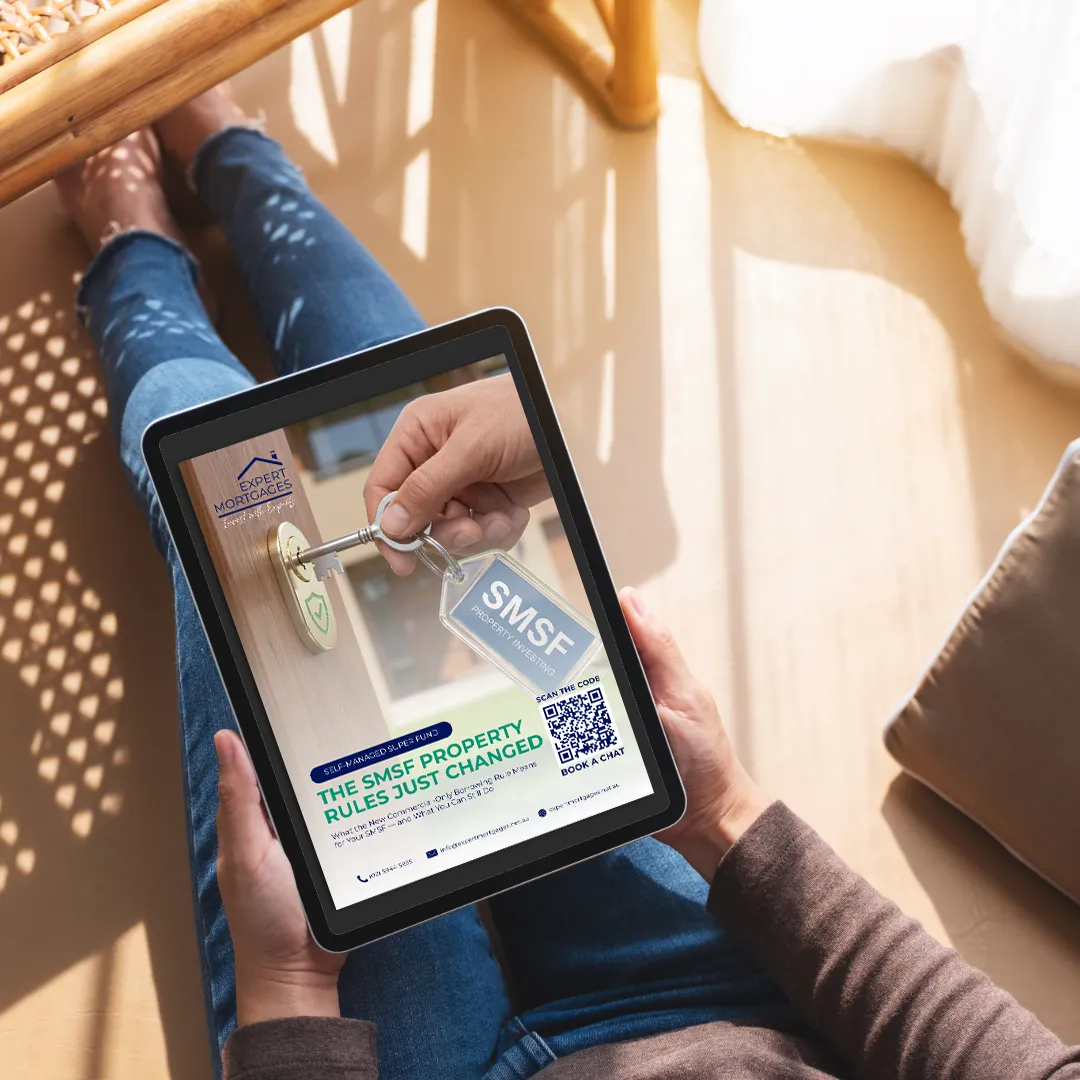
The Smart Business Owner's Guide to SMSF Property Investing
How to legally use your super to buy commercial premises, slash your business rent, and accelerate your retirement wealth.
How It Works
We've simplified the mortgage process into three clear stages to turn your financial goals into realities with peace of mind.

Specialist Lender Selection
We begin by understanding your unique story and wealth-building goals, mapping out your borrowing power with precision.

Expert Solution
We compare options from our panel of 40+ lenders to find the smart, tailored lending strategy that best fits your future.

Path to Prosperity
We handle the complex paperwork and management through to settlement, ensuring a clear and empowering transition to your new loan.
SELF-MANAGED SUPER FUND (SMSF)
Frequently Asked Questions
Can I still borrow through my SMSF to buy a residential investment property?
No — not for a new purchase. Since 10 August 2026, SMSFs can no longer enter into a new Limited Recourse Borrowing Arrangement (LRBA) to acquire residential property; this is now law, following the Treasury Laws Amendment (Tax Reform No. 1) Act 2026. If you already had a residential SMSF loan in place before that date, it’s unaffected — it’s fully grandfathered and doesn’t need to be unwound. Your fund can still buy a residential property outright using cash reserves; what’s no longer available is borrowing to leverage the purchase.
What happens to my existing SMSF residential property loan?
Nothing changes. Existing residential LRBAs entered into before 10 August 2026 are fully grandfathered under the new law — there’s no requirement to sell the property, restructure the loan, or pay it out early. You can also still refinance an existing residential SMSF loan to a different lender if you want better terms; refinancing of pre-ban arrangements remains explicitly permitted.
Can my SMSF still borrow to buy a commercial or business property?
Yes. The ban applies specifically to residential property — LRBAs for commercial property, or more precisely “business real property” as defined under the Superannuation Industry (Supervision) Act, remain available and unaffected by the change. This generally covers property used wholly and exclusively for business purposes. Mixed-use properties, vacant land, or anything with a residential component may need closer review to confirm they still qualify, so it’s worth checking the specific property against the business real property test before assuming it’s eligible.
Why did the government ban SMSF residential borrowing?
The ban was introduced as part of a deal between the government and the Greens to secure passage of the broader 2026 tax reform package through the Senate, which also included changes to negative gearing and the CGT discount. The policy direction itself isn’t new — tightening SMSF borrowing rules was recommended by the 2014 Murray Financial System Inquiry and raised again by the Council of Financial Regulators in both 2019 and 2022. The government has described SMSF residential lending as a small share of the overall market — under 1% of total residential borrowing — but the change was still added late in the legislative process, which drew criticism from parts of the SMSF and finance industry over the lack of a formal consultation period.
If I already started the process before the ban, is my purchase still protected?
Yes, provided contracts were exchanged before 10 August 2026 — settlement can occur afterwards and the arrangement remains valid. If you were mid-process (fund established, bare trust in progress, finance being arranged) but hadn’t exchanged contracts by that date, unfortunately the new residential borrowing pathway is no longer available to you, and it’s worth speaking with your broker or adviser about whether a commercial property purchase or a cash-funded residential purchase better suits your fund’s strategy going forward.